
Confused about what to do first in Warframe? This ultimate Warframe beginner guide breaks down the exact progression roadmap to follow, essential beginner tips, and costly mistakes to avoid.
Warframe is one of the best sci-fi shooters out there, but its chaotic UI and lack of hand-holding can leave new and returning players feeling completely overwhelmed. In this video, we cut through the noise. Whether you are wondering which starter Warframe to pick (Excalibur vs. Mag vs. Volt), how to navigate the massive Star Chart, or how the complex Warframe modding system actually works, this guide has you covered.
Complexity can be both a good thing and a bad thing. Warframe has been cooking since 2013, making it one of the most complex games on the market.
Its layered quests, content, and systems, however, can make Warframe incredibly difficult to grasp for new players. The game itself doesn’t do a particularly good job of telling new players what to do, which is where this guide comes in.
Over the course of this guide, we’ll cover everything you need to know as a new Warframe player — from which Warframe to choose as your starter frame to how to increase your power with mods and navigate the star chart.
At the end, we’ll even lay out a checklist of important weekly activities and point out gamebreaking mistakes to avoid.
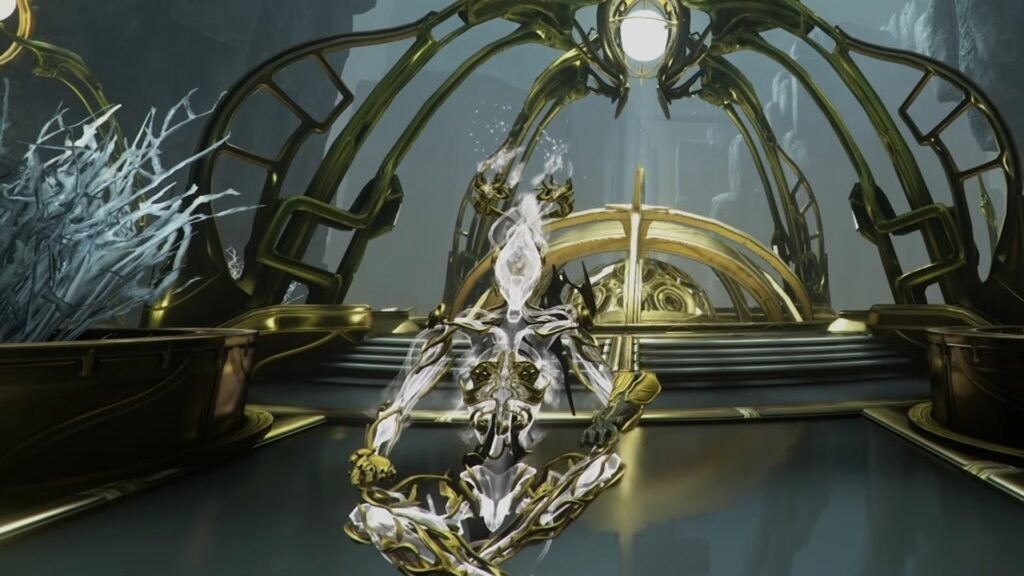
At a glance:
- The first choice you’ll be faced with as a new Warframe player is choosing your starter frame:
- Excalibur: The swordsman. Easiest to understand for new players.
- Mag: The caster. Excels at ranged combat, but has a learning curve.
- Volt: The speedster. Combines melee and ranged combat for lethal effectiveness.
- Warframe’s combat is unique but takes some getting used to:
- Crouch and jump to bullet jump in any direction
- Hold aim while in midair to aim glide
- Combine these movements to rocket across the map
- To progress in Warframe, clear Junctions and proceed with the main cinematic questline in order:
- Start with The Awakening and Vor’s Prize
- Move on to Once Awake, Archwing, and Stolen Dreams
- Continue with Natah, The Second Dream, and The War Within
- Catch up with the latest content by completing:
- The Sacrifice
- The New War
- Angels of the Zariman
- Whispers in the Walls
- The Hex
- The Old Peace
- Level up your Warframe and weapons with:
- Mods (making sure to match polarity)
- Damage Types (both physical and elemental)
- Raising your Mastery Rank
- Don’t forget to craft new Warframes, weapons, and other items using your Foundry.
🔴 Part 1: Starting Out
In the following section, we’ll cover:
- Picking your starter Warframe
- How movement and combat work in Warframe

Which starter Warframe should I choose?
The consensus among the Warframe community is that Volt is the best starter Warframe to choose because both Excalibur and Mag are easy to grind even without a fully-stocked Dojo. Whichever frame you choose, however, just understand that the other two are craftable and relatively easy to acquire.
The first major choice you’ll face in the game is selecting between three different starter Warframe options. This occurs within the initial tutorial quest in the game called The Awakening, which does teach you something about how to play the game.
Nonetheless, new players often don’t know which frame to choose, and they don’t understand the consequences of your choice.
The first thing to mention is that unlike in a game like Pokémon, where your choice of a starter companion sticks with you for basically the entire game, the consequences of the choice you make here are pretty minimal.
Whichever frame you go with, you’ll be able to get the other two relatively easily. So, don’t sweat this choice too much. You’re not going to be stuck with the frame you chose for very long.
But the three Warframes you have the option to choose between are:

1.) Excalibur: The Swordsman
Like the name suggests, this is a swordsman archetype. Excalibur is mainly focused on melee combat with abilities like:
- Radial Blind, providing excellent crowd control.
- Exalted Blade, summoning a high-damage energy sword that slices through early-game bosses with ease.
I’ll just cut straight to the chase and recommend Excalibur to any new players. This is the easiest and most rewarding frame to choose.
The other two options we’re going to cover do have their own benefits, but in addition to being the poster boy of the entire game, Excalibur is also much more intuitive and easy to use than the other two starter frames.
And again, you’ll be able to get the other two options relatively early along in the game. So, when in doubt, Excal it out.
But, one of your other two options is Mag.

2.) Mag: The Caster
The main focus of Mag is crowd control. This caster-oriented Warframe manipulates magnetic fields to strip enemy shields and armor. Her Magnetized skill creates bullet bubbles that redirect enemy fire back at them.
However, using Mag effectively requires understanding energy management, which is something you won’t really grasp until later on the game.
You’re going to have to deny your instincts to just jump in and hack and slash everything to death.
Now, Mag is a female frame, so if you identify with that gender more strongly, you may want to choose this Warframe. But overall, Excalibur is the more intuitive option.

3.) Volt: The Speedster
Your third option is Volt. Where Volt really shines is in speed.
This is a versatile, high-energy Warframe. His ability Electric Shields boosts critical damage. He has ability to speed himself up. And, he can clear entire rooms with ease with his Discharge ability.
Compared to Excalibur or Mag, Volt remains useful on into the endame. So, this Warframe might make sense as an early investment.
However, just like Mag, to use Volt effectively, you need to have some basic knowledge how the game works, again making Excalibur the best choice for new players in my opinion.
But I’ll reiterate: Whichever option you choose, don’t stress it. You’ll be able to get not only the other starter frames, but dozens of other Warframes, each with their own unique ability toolkit, relatively early on in the game.
Between Excalibur, Mag, and Volt, just choose whichever option you resonate with the most. Understand that a whole world of new options will open up for you relatively soon.
How does parkour work in Warframe?
Warframe’s parkour system is one of the central highlights of the game. It’s something that makes Warframe truly unique and a lot of fun whether you’re just starting out or you have hundreds of hours under your belt.
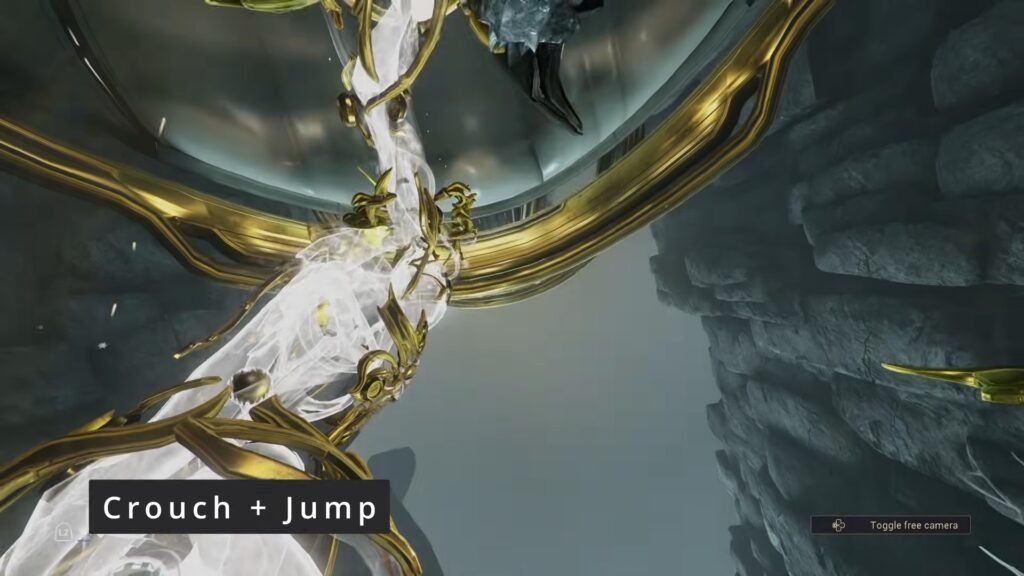
Where Warframe is different from basically every other game is your immense freedom of movement. In Warframe, you can bullet jump in any direction — even straight up.
The bullet jump is the most unique component of the Warframe movement toolkits, but it is not the only aspect that makes movement in Warframe special.
To bullet jump, you just hold crouch, then press the jump button, and whichever direction you’re facing, you will bullet jump in that direction.
You can also move through the map in Warframe at incredible speed by chaining different mobility functions together.
To take full advantage of this:
- Bullet jump at around a 45° angle,
- Then double jump,
- Then hold the aim button to glide.
What melee damage types are there in Warframe?
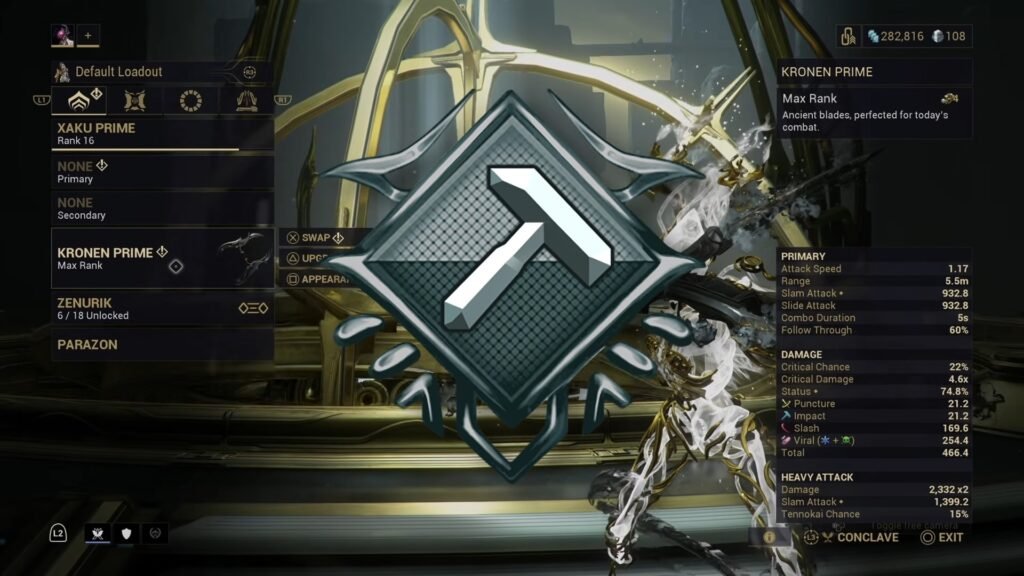
The three basic types of physical damage are Impact, Puncture, and Slash.
- Impact damages shields and opens enemies up to high-damage mercy finishers.
- Puncture deals bonus damage to armor and reduces the damage the enemy inflicts on you.
- Slash, however, is the undisputed king of physical damage. It bypasses armor entirely, dealing direct damage over time to the enemy’s health pool via bleed status effects.
As far as melee weapons go, I highly recommend weapons that do Slash damage — both for early and endgame content.
These three types of physical damage are by far not the only types of damage you can do in the game. That’s just a basic overview to get you started.
Subscribe for early access to new guides 👇
🔴 Part 2: Progressing Through the Game
Once you’ve chosen a starter frame and you understand the basics of movement and damage in the game, a new challenge awaits you: Understanding what to do in Warframe in terms of content.
In this section, we’re going to cover how to complete Junctions and which order to progress in the main quest to get the most out of the game.
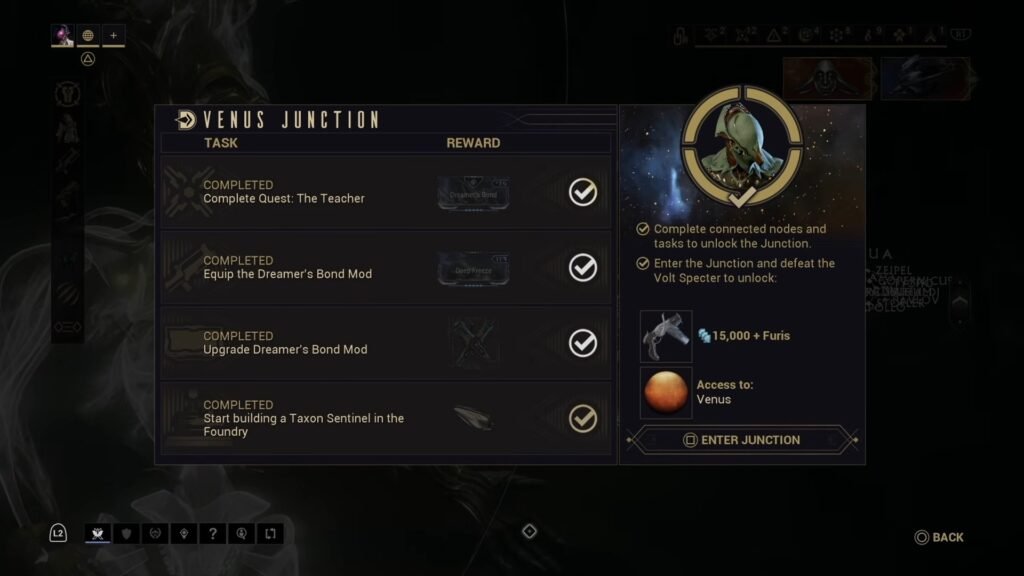
What do Junctions do in Warframe?
Junctions are special missions you complete to unlock additional planets in the star chart. Completing the Venus junction on Earth, for instance, gives you access to Venus and all of its missions.
Then, you complete the Mercury junction to access Mercury — and so on and so forth until the entirety of the original star chart is unlocked.
Certain other areas like Deimos and Zariman are unlocked by different means, but that’s just something you need to know about yet as a new player.
Your first and foremost focus should be unlocking Junctions. These each have a unique boss that’s relatively simple to beat, but they do test the abilities and powers you’ve gained so far.
Each junction is meant to function as a challenge that provides the excellent reward of unlocking further content in the Warframe star chart.
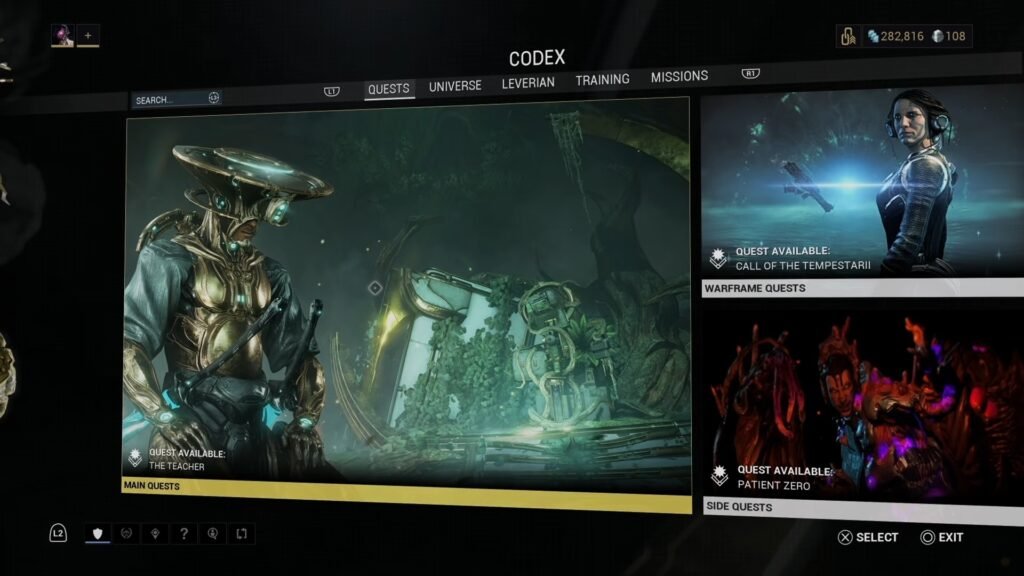
How do you do Warframe’s quests in order?
Warframe is not just about exploring the star chart. There’s also a very rich cinematic storyline in the game that you’ll want to get through to unlock new content and experience Warframe in its entirety.
In this guide, I’ll explain the order in which you should complete the initial quests in the game, but check out my returning player guide for where to go from there.
Introductory Arc
Once you’ve completed the tutorial quest, The Awakening, you’re going to want to tackle Vor’s Prize, where you face one of the recurring villains of the early quest lines, Vor, and unlock further functionality.
From there, you do the quest Once Awake, and then The Archwing to unlock your very own flying mech.
Next, you should do Stolen Dreams, a side quest, and The New Strange, which is located under “Warframe Quests”.
👆 This is essential for the development of the main quest line, even though both of these quests are included outside the “Main Quest” section.
The Plot Thickens
Going back to the main questline, the next quest in the order of progression is Natah, which is quite lengthy and intense, but definitely worth it.
From there, prepare yourself for The Second Dream, which represents a huge step forward in the narrative quality of the game, has some amazing cinematics, and features a major reveal.
Next is The War Within, which continues the narrative of The Second Dream. Then from there, you should complete the Chains of Harrow and The Apostasy Prologue.
That will prepare you for The Sacrifice, which focuses on a new Warframe, Excalibur Umbra.
Endgame Quests
And then finally, it’s time to tackle The New War.
I will warn you, The New War takes about 6 hours. You can’t do anything else once you start it. You can take breaks, though whenever your progress is saved.
You play as different characters. There’s lots of spying and sneaking. It is quite intense, but it is really worth it.
Then from there, you’ll be caught up with basically the first 10 years of content in Warframe. I recommend switching over to my returning player guide to figure out where to go from this point.
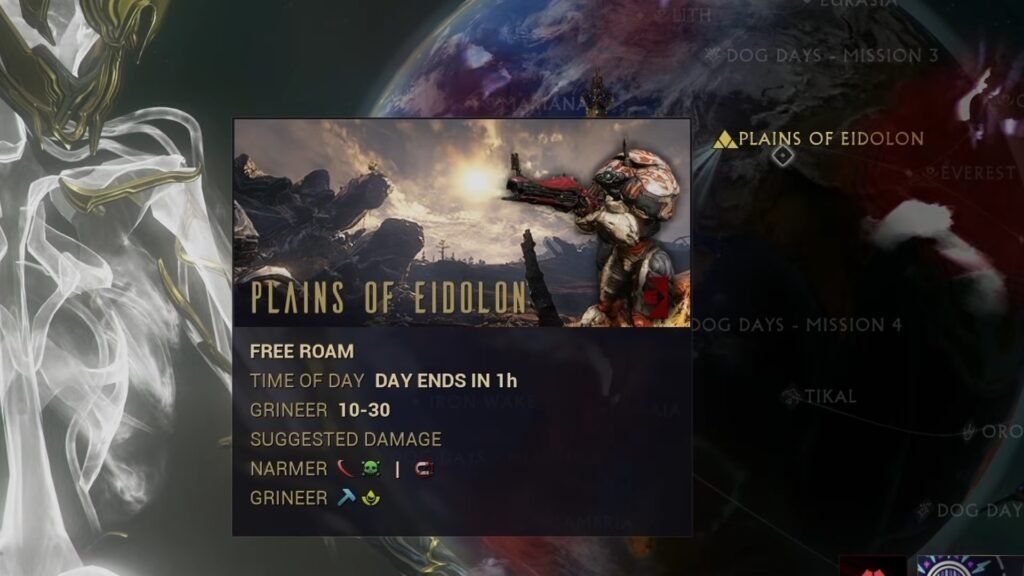
Should new players tackle Warframe’s open-world areas?
Do not get stuck in Warframe’s open-world content early on, namely:
- The Plains of Eidolon on Earth
- Orb Vallis on Venus
- The Cambion Drift on Deimos
It’s fine to jump in and test it out, see what it’s like, but understand that a lot of the progression and resources here only apply to endgame content.
You’re going to spend a lot of time in these open-world zones — also known as Free Roam zones — later on the game. For now, just progress through the quests and the star chart until you’ve unlocked the full star chart and you’ve caught up with The New War.
🔴 Part 3: Warframe Mods Guide
In this section, we’ll cover how mods work in Warframe, how to upgrade them, and which mods to slot in your Warframe and weapons. Plus, we’ll also touch on elemental damage and how it works.
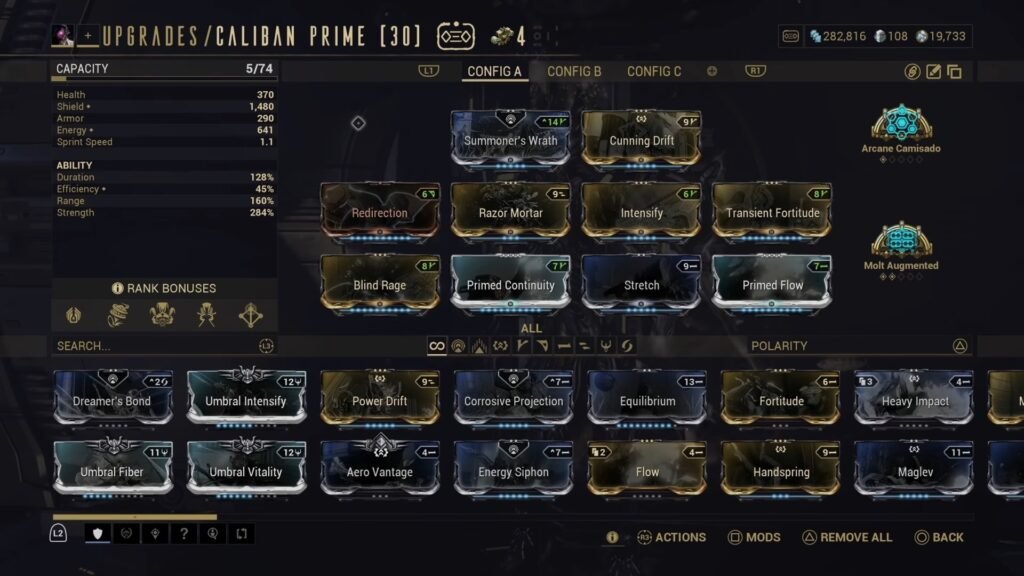
What do mods do in Warframe?
You can install mods in both your Warframe and your weapons to increase their power and change their functionality.
Your Warframe is kind of like your character. There are lots to choose from. They each have their own identity and abilities.
From there, you have three weapons:
- Your primary weapon
- Your secondary weapon
- Your melee weapon.
For all of these (your Warframe and all your weapons) you have the ability to slot mods and arcanes.
As a new player, you really don’t need to worry about arcanes. I’ll cover that in more detail in a future video.
We should, though, talk about mods:
- Which ones are most essential,
- What mod polarity is,
- What mod capacity is,
- Etc.
What does “mod capacity” mean?
Mod capacity is the number at the top-left of a Warframe or weapon’s Upgrade screen, which essentially indicates how many mods you can slot on your Warframe.
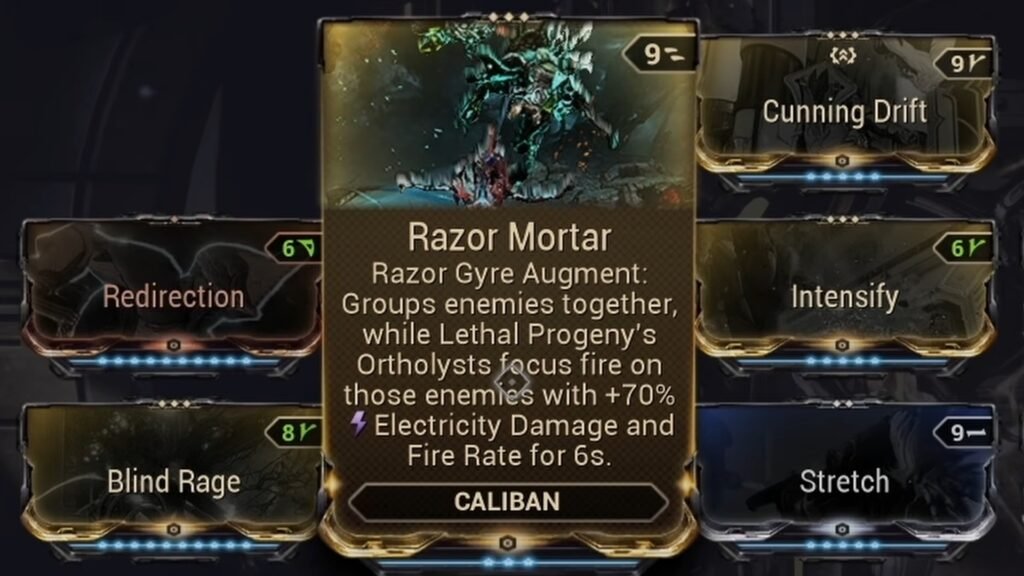
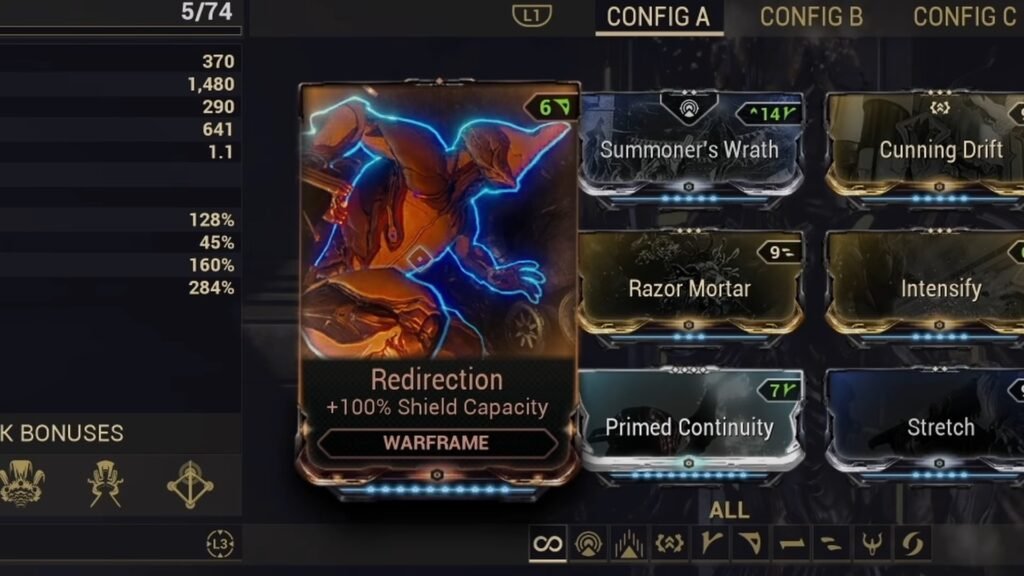
Each mod takes up a certain amount of capacity. For instance, Razor Mortar takes up 9 capacity when fully upgraded.
You want to make sure the cost of your mods does not exceed the capacity of your frame or your weapon.
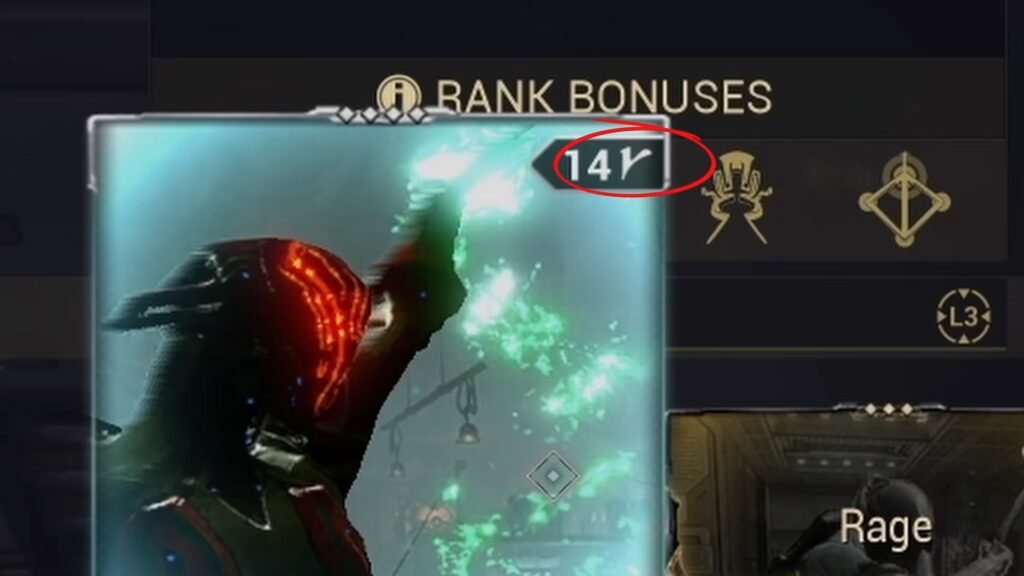
One way you can increase the capacity of the items in your arsenal is with either an Orokin Reactor on your Warframe or an Orokin Catalyst on your weapons. Whether it’s your weapon or your Warframe, these items double your mod capacity.
How does mod polarity work in Warframe?
To make sure you use your mod capacity efficiently, try to match up your mods with the polarity of their slot. For instance, an empty slot might be polarized for Madurai, which is signified by a “V” symbol.
When you slot a mod with its matching polarity, its capacity cost goes down by half.
You can also increase the overall capacity of your Warframe with aura mods. These are slotted in the top-left slot.
Instead of using capacity, aura mods provide additional capacity. If you slot Summoner’s Wrath on a Madurai aura slot, for instance, your Warframe will get 14 extra capacity.
Next to your aura slot, you will find an Exilus slot. These are basically utility mods. You don’t have to put them here, but you have an extra slot just for Exilus.
So, a fully maxed-out Warframe mod setup will consist of:
- 8 normal mods
- 1 aura mod
- 1 Exilus mod
- Plus 2 Arcanes (which I’m just skipping over for now.)
You’ll want to match mods with their polarity, and install an Orokin Reactor on your Warframe or an Orokin Catalyst on your weapon as soon as possible.
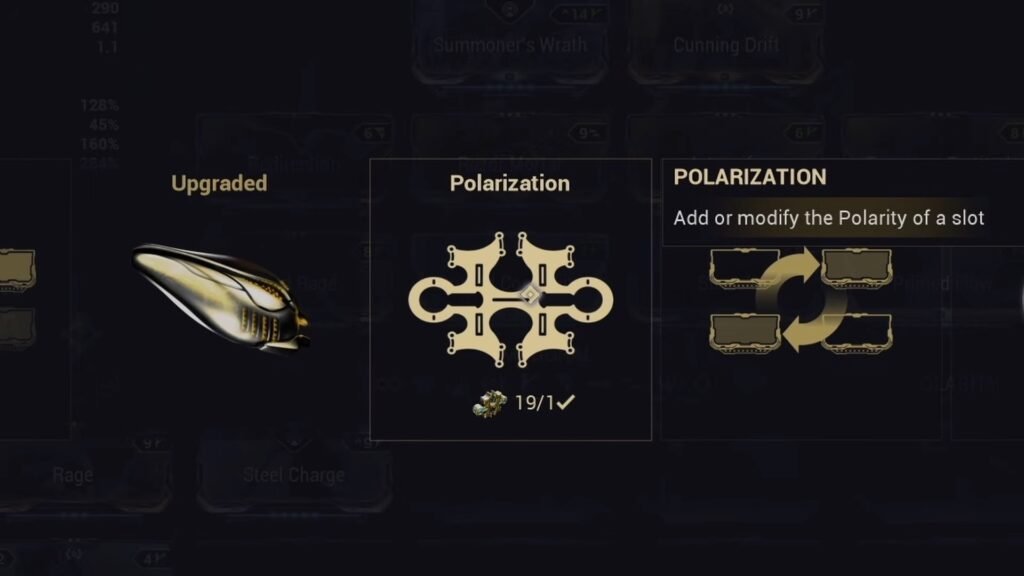
Once you get your Warframe or your weapon to its max rank, you can use an item called a Forma to:
- Change the polarity of a slot
- Add polarity to a slot that is not polarized
This allows you to get extra capacity out of your arsenal item, but it does reset its rank back to zero, meaning you have to level it up all over again.
How do you rank up your mods in Warframe?
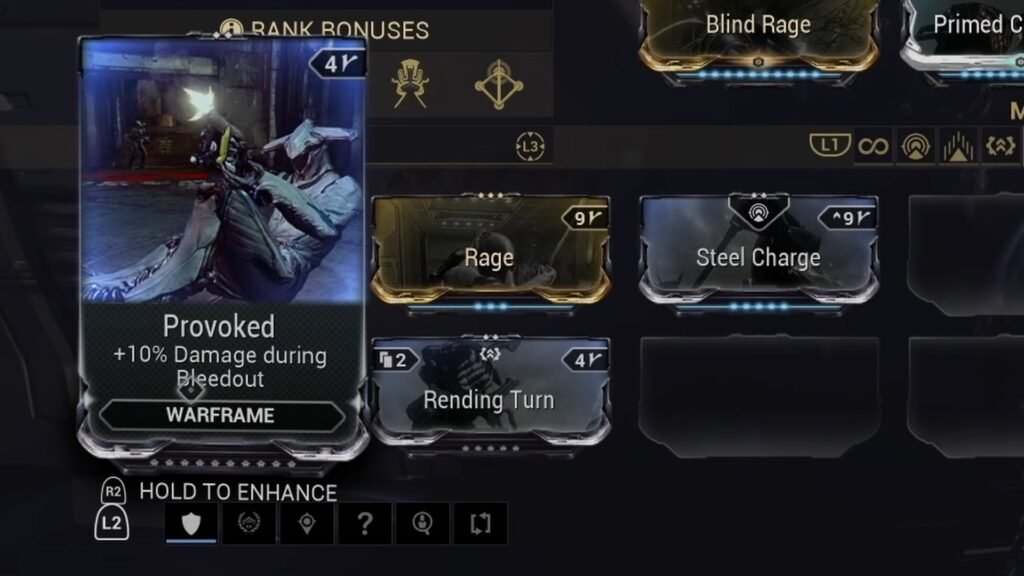
To rank up a mod, simply hover over it and select the key or button that says “Hold to Enhance.” The number of ranks each mod has depends on the mod, but whatever mod it is, ranking it up will cost both Endo and Credits.
These are essential currencies you will need tons of throughout your Warframe journey. I am planning to make dedicated guides on how to get both, but also do understand that you will simply acquire Endo and Credits passively as you progress through the game and its many missions and quests.
There are optimized ways to farm each of them, but as a new player, you won’t need to worry about that too much. Do check back in the near future for the dedicated guides I’m going to make on how to farm Credits and Endo.
We’re going to finish up this section just by listing out some essential mods and explaining how elemental damage works on weapons.
What are the most important mods to slot?
Some of the most essential mods to slot in your Warframe include:
- Redirection, which increases your shield capacity.
- Vitality, which increases your health.
From there, you’ll also want Intensify and or Continuity to increase the power and duration of your abilities.
The mod Flow increases your maximum energy, and Streamline reduces the cost of abilities.
Whichever Warframe you start with, try to slot all those mods.
On your primary weapon, the most important mods are:
- Serration for increased damage — assuming it’s a rifle, which I do recommend for your primary as a new player. Shotguns and bows are good in some ways, but rifles are a lot easier to understand.
- Split Chamber or the upgraded version, Galvanized Chamber. Split Chamber is the easier early-game option for increasing your multi-shot on rifles.
On your secondary weapon, the two most important mods are:
- Hornet Strike: Increases the overall damage of your secondary weapon.
- Barrel Diffusion: Increases the multi-shot of your secondary weapon.
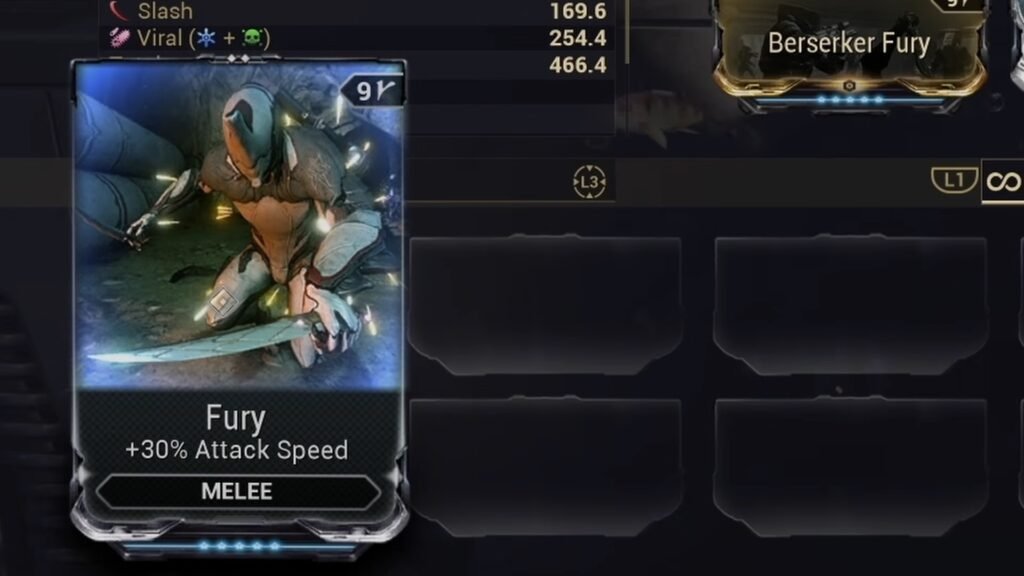
On your melee weapon, I recommend:
- Pressure Point for increased damage.
- Fury for increased attack speed.
Also, just as Warframes have aura mods, melee weapons also have stance mods that change how you use the weapon and also increase its capacity.
I know that’s a lot, but we should mention one more thing in this section before finishing up, and that’s elemental damage.
What types of elemental damage are there?
In Warframe, there are four main types of elemental damage:
- 🧪 Toxin
- ⚡️ Electricity
- ❄️ Cold
- 🔥 Heat
These are great on their own. They’re each useful against different enemy types, but you can also combine them to create new elemental damage types:
- 🫠 Corrosive: Toxin + Electricity
- 💥 Blast: Cold + Heat
- 🧲 Magnetic: Cold + Electricity
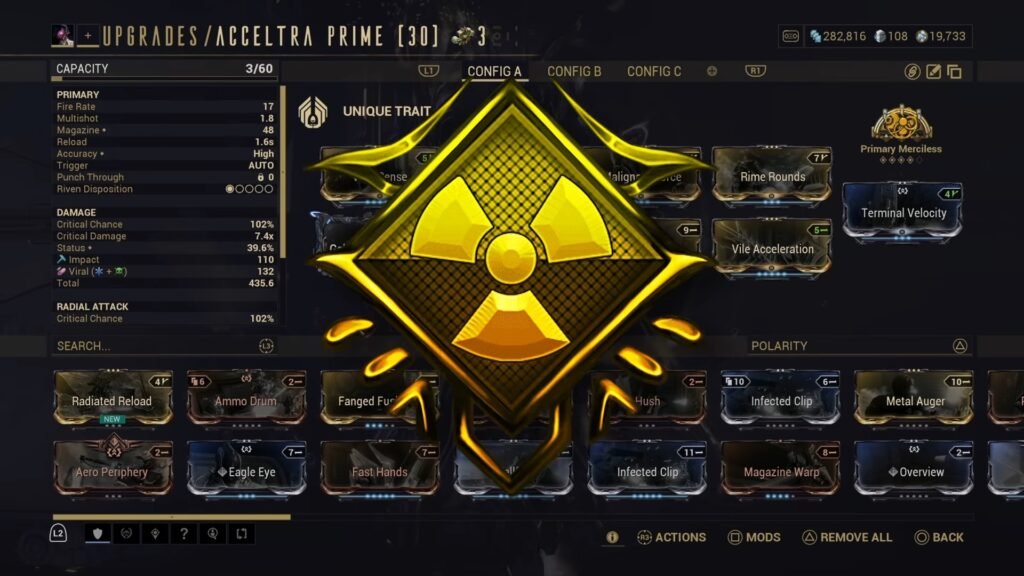
- ☢️ Radiation: Heat + Electricity
- ⛽️ Gas: Toxin + Heat
- 🦠 Viral: Cold + Toxin
You combine these elements by slotting them in succession in your weapon’s Upgrade screen.
It doesn’t say so in the game, but mods in Warframe progress from the left to the right and from the top to the bottom.
The top-left slot can be considered “mod slot 1,” making the bottom-right slot “mod slot 8.”
To get Viral, for instance, you need to have Toxin and then Cold one after the other in the order of mod progression.
Viral is probably the best choice for new players if you want good elemental damage, but there are tons of options to play with here.
🔴 Part 4: Mastery & Platinum
Next, we’re going to cover briefly how Mastery Ranks and Platinum purchases work in the game.
What is Mastery Rank?
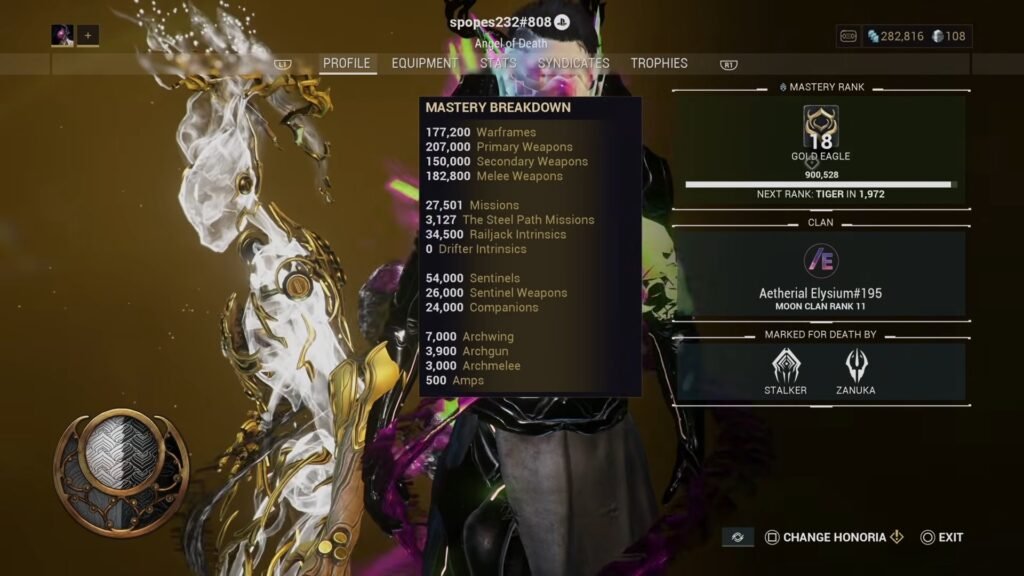
Mastery is a system that mainly determines which Warframes and Weapons you can access — also how many Arsenal items you can have in your inventory, how much Reputation you can stack with Syndicates, etc.
All you really need to know as a new player is you want to prioritize increasing your Mastery Rank early on. You do so simply by mastering Warframes, weapons, and other items that level up, like your Archwing.
You gain Mastery Points whenever you get a new piece of gear up to its maximum level. This is why it’s important to level up different Warframes and weapons — even if you don’t intend to use them — simply to farm Mastery Points.
Then, at each Mastery level, there is a test that you need to complete to get to the next Mastery Rank. These vary in content and difficulty, but you can preview any Mastery Test before you do it by going to Cephalon Simaris’ Sanctuary in any relay.
Long story short, try to grind up your Mastery Ranks as quickly as possible as a new Warframe player. You’ll need to do so to unlock new content in the game.
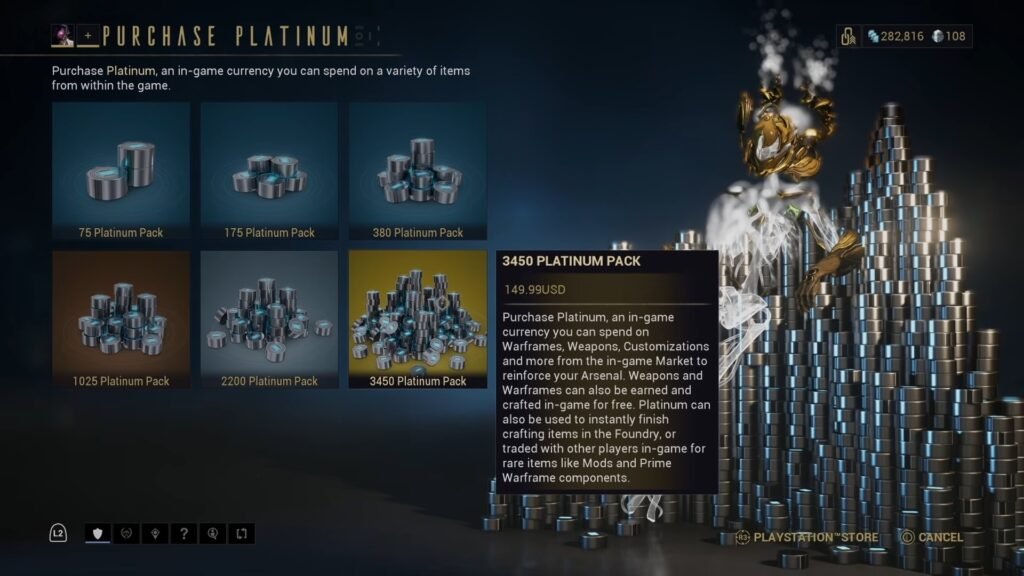
What is Platinum in Warframe?
Platinum is the primary premium currency in Warframe. One thing that makes Warframe really different from other live service games is you can freely trade its premium currency with other players.
There is a huge and dynamic Platinum market in Warframe where you can sell items to make an infinite amount of Platinum without ever spending a single dollar.
- Every new Warframe account is awarded 50 free Platinum.
- To prevent exploits, you cannot trade this free Platinum with other players.
- You can, however, use your free Platinum to get a basic idea of how Platinum works in the game and give yourself a couple of important upgrades.
Personally, I recommend that you use your free Platinum on Warframe and weapon slots. You will unlock more Warframe and weapon slots as you go up in Mastery Rank, but even so, you probably won’t have enough of these to stash all the Warframes and weapons you want.
So, don’t get distracted by the various shiny items in the store. Instead, set yourself up for long-term success by using that free Platinum for Warframe and weapon slots.
Speaking of Warframes and weapons, let’s talk a little bit about how you’re going to get each of those.
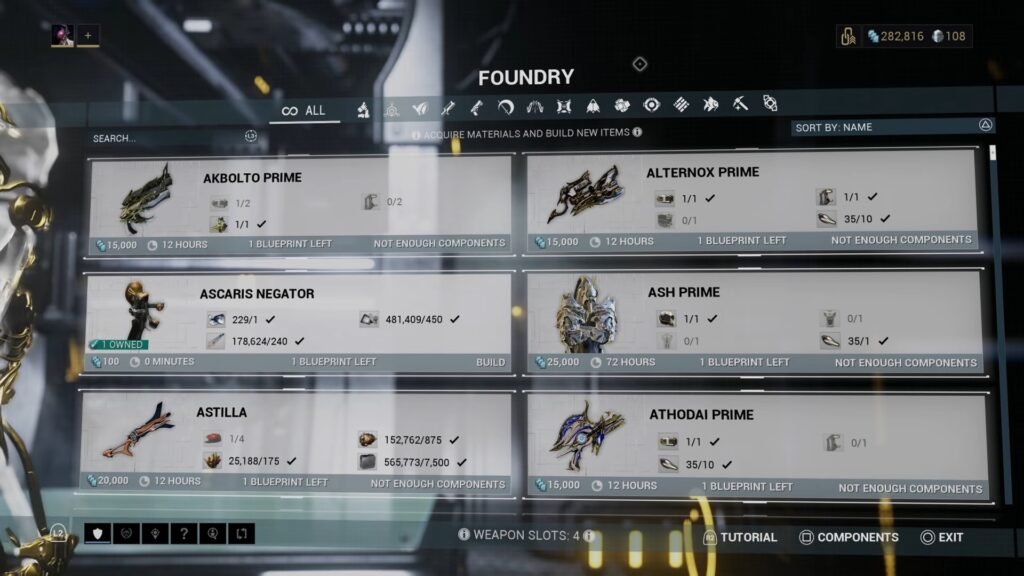
How do you craft Warframes, weapons, and other items?
The primary way you get anything new in Warframe is by crafting it in the Foundry. To craft any item, you need a variety of different resources and/or parts.
This gets complicated quickly, but just understand that you will need to farm these parts and resources to make new items in the game.
Thankfully, I do have a dedicated guide on farming that covers:
- The basics of how to farm
- Which Warframes and weapons to use
- Advanced tips and tricks.
I do recommend checking that out for further details.
But long story short, you’ll unlock the Foundry early on in the game, and you’ll use it to get basically all the gear you’re going to want.
We’re going to start finishing up with a weekly and daily checklist for new Warframe players:
Warframe Daily Checklist
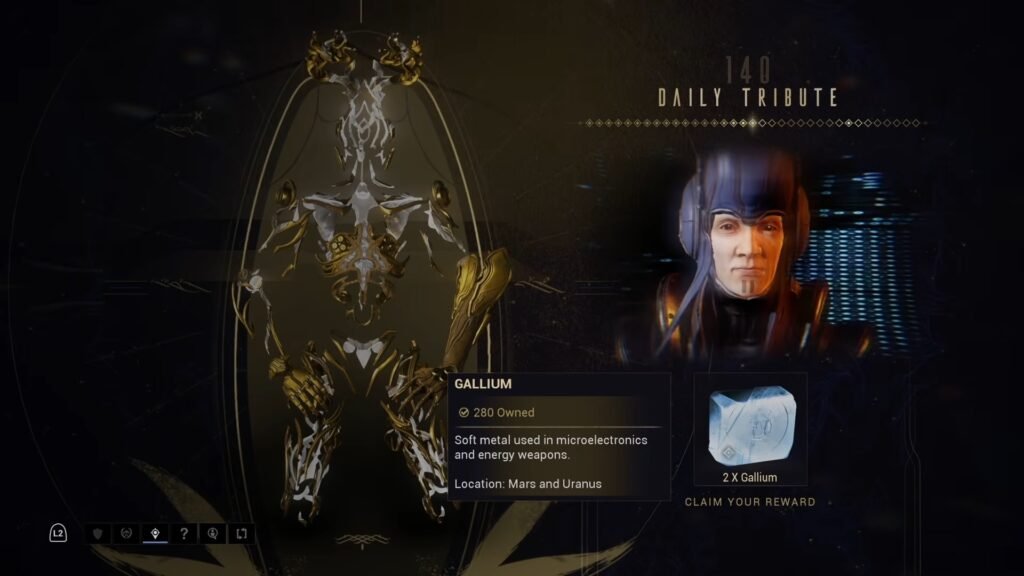
✅ Daily Login Reward
Every day when you log in (the daily login reset for me on Pacific Time is 5:00 PM), you will get a daily login reward.
These are random and vary from day to day (except for Milestone Rewards), but do make sure you log into Warframe at least once per day to get your daily reward.
Sometimes there are rare resources or hefty discounts off Platinum. Even if you take a break from the game, definitely log in at least once per day to get your reward.
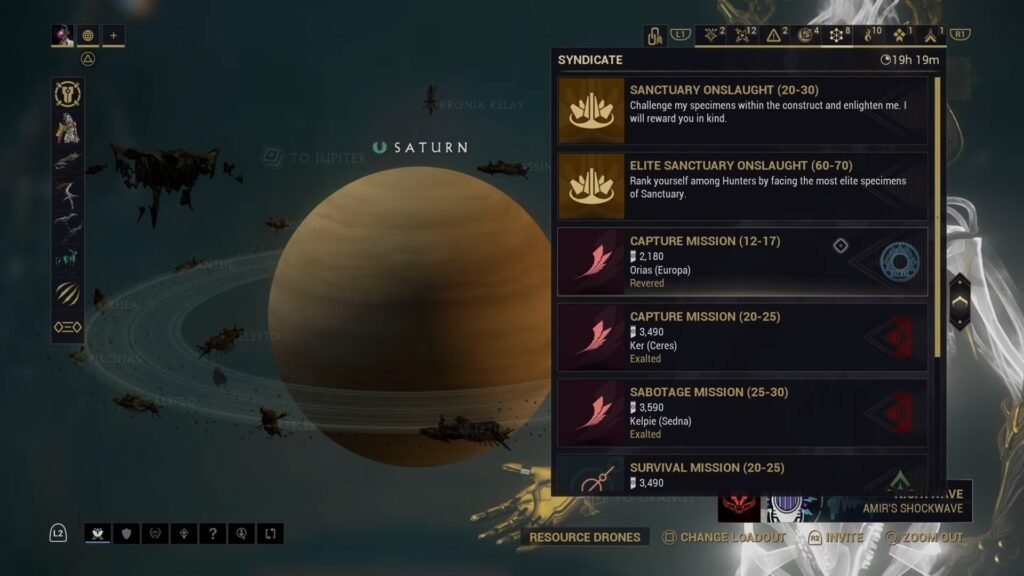
✅ Syndicate Standing
You should also log in every day to farm Syndicate Standing. You join Syndicates by going to the Syndicate station to the left of your Navigation station and then choosing a Syndicate to pledge yourself to.
These Syndicates don’t all get along, so as you go up in Standing with one Syndicate, you’ll go down with other ones.
When you’re first starting out, just choose whichever Syndicate appeals to you, and then you’ll gain standing in your Syndicate by doing most missions.
You can also grind Syndicate Standing specifically by doing Syndicate missions, located under the Syndicate tab in your star chart.
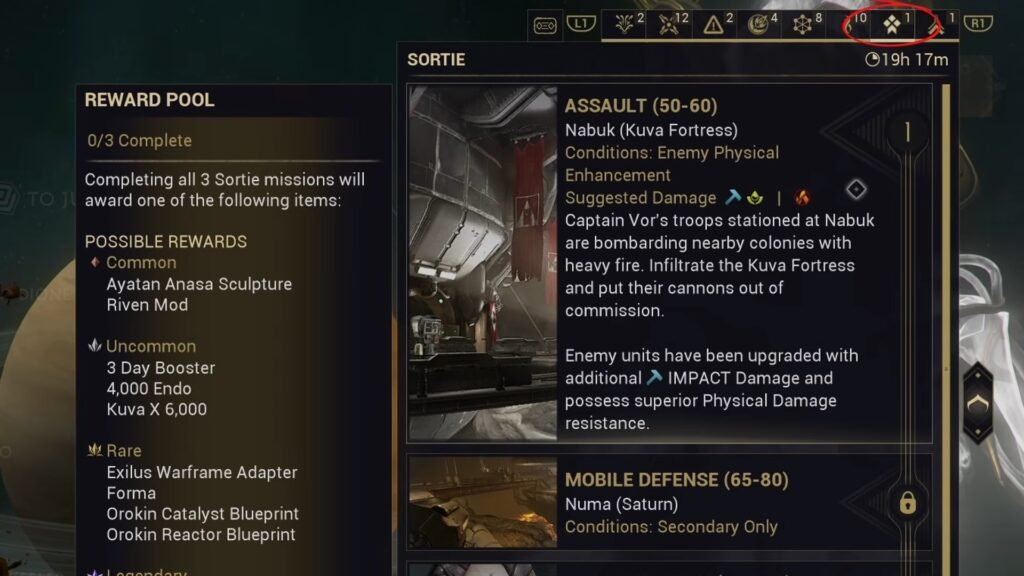
✅ Sorties
There’s a daily activity that you should try to do once you’ve gotten to the midgame. I’m talking about Sorties, which have their own category in the top bar of the star chart. These provide very valuable rewards for new players, and they reset every day.
Warframe Weekly Checklist
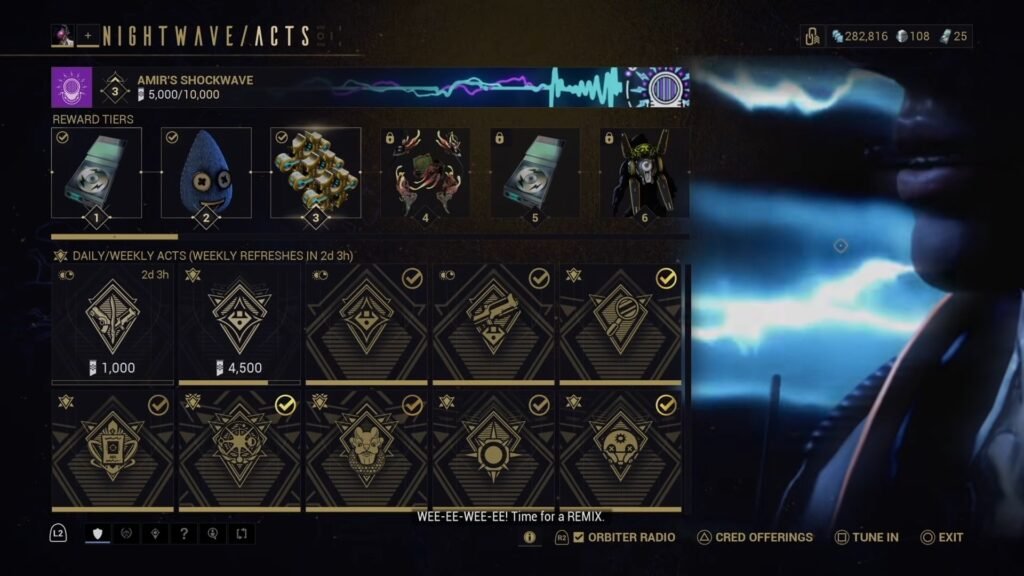
✅ Nightwave Objectives
Every week (resetting on Sunday), new objectives and rewards become available in Nightwave.
Nightwave is kind of like a free battle pass where you complete objectives to get points. Getting points progresses you along the battle pass.
And at various Nightwave levels, you’ll get Cred, a currency used in the Cred offering store (which does refresh every week), to snag valuable cosmetics, mods, and other items.
As far as a weekly checklist goes, just make sure you check out Nightwave whenever it resets. The countdown to the reset is shown in the bottom left of the Nightwave screen.
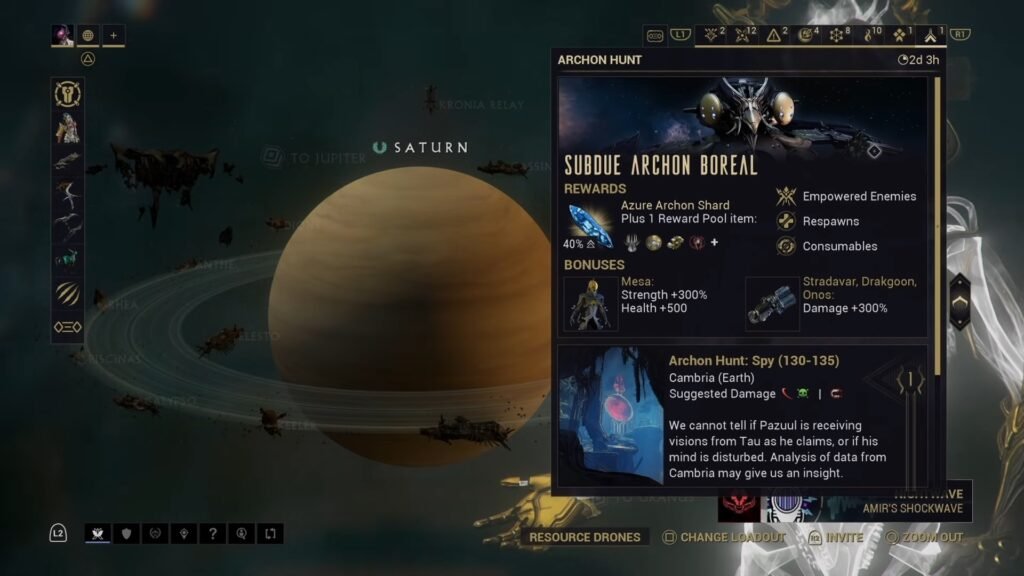
✅ Archon Hunts
Something similar to Sorties that resets every week (once you’ve completed The New War) is Archon Hunts. These also give very valuable rewards.
I will mention, though, that Sorties are relatively difficult and Archon Hunts are even more difficult, but in terms of a daily and weekly checklist, these are worth mentioning.
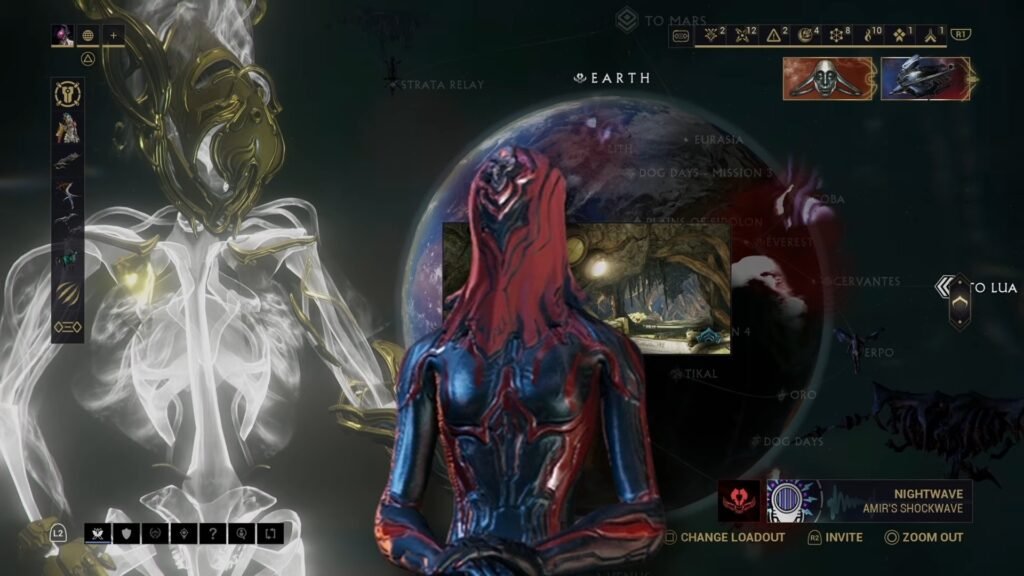
✅ Weekly Vendors
There are a variety of vendors in the game who refresh their wares on a weekly basis. A lot of these you won’t unlock until later in the game, but two you unlock relatively early on are:
- Teshin, the Steel Path vendor, who’s located in any Relay. To unlock Steel Path, you just have to complete every node in the original star chart.
- You also unlock Iron Wake after completing the Chains of Harrow quest. And in this area on Earth, there’s a vendor called Palladino whose wares also refresh on a weekly basis.
Common Warframe New Player Mistakes
For the final section of the guide, here are a few mistakes you should avoid as a new Warframe player:
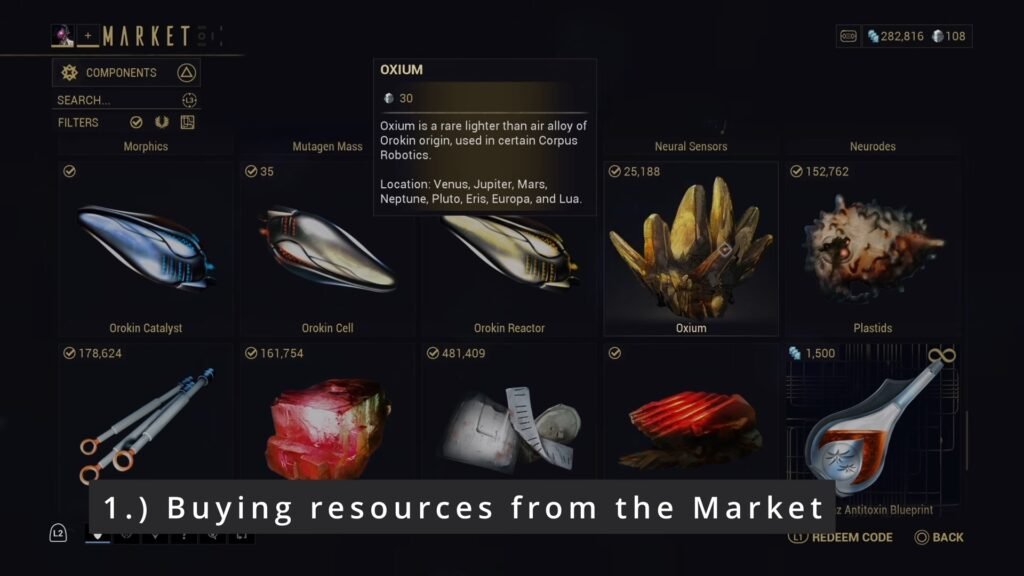
1.) Buying resources from the Market
First, as tempting as it may be, do not buy resources from the Platinum Market in Warframe. These are very overpriced, and with my farming guide, you can farm all of these with ease. Buying resources from the market is a great way to waste your Platinum, so definitely farm them instead.
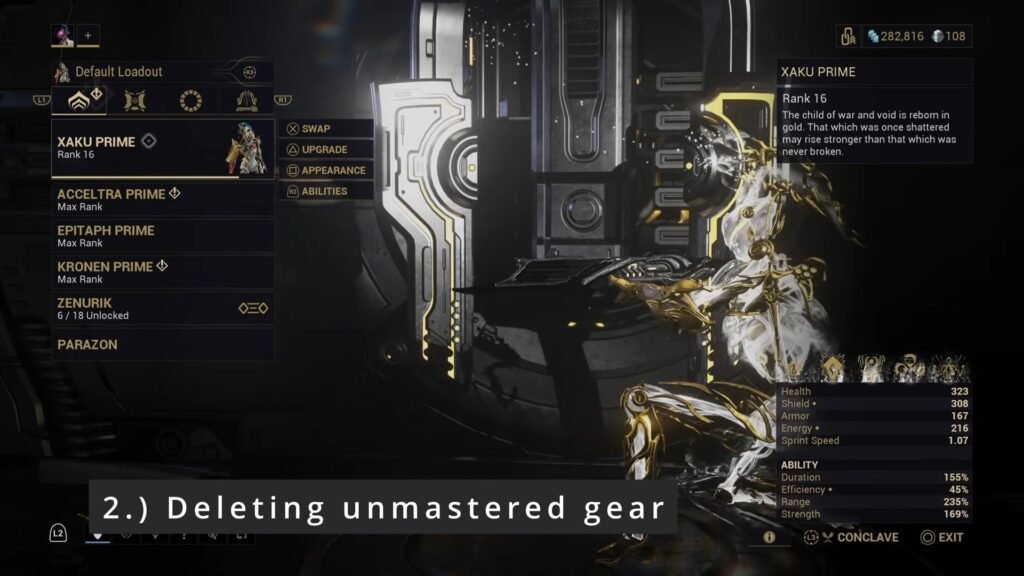
2.). Trashing unmastered gear
Never get rid of any gear before it reaches Rank 30. You have to get gear to Rank 30 to get your Mastery Points. So even if it’s something you’re not going to use, level it all the way up once to collect your Mastery Points.
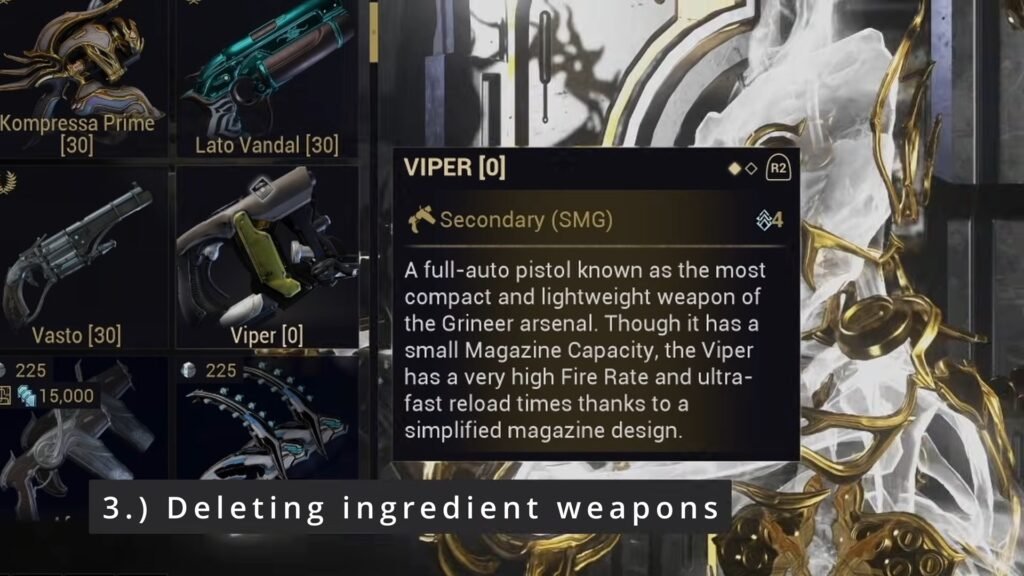
3.) Selling weapons used to make other weapons
Don’t sell any weapons that are used as components of other weapons. So for instance, the secondary weapon Viper is pretty much useless, but you need two of them to craft the Twin Vipers.
And, as you farm Mastery Points, you’re going to want to create every single weapon there is. So definitely check online resources to find out if you can safely sell or get rid of a weapon — after, of course, getting it to Rank 30.
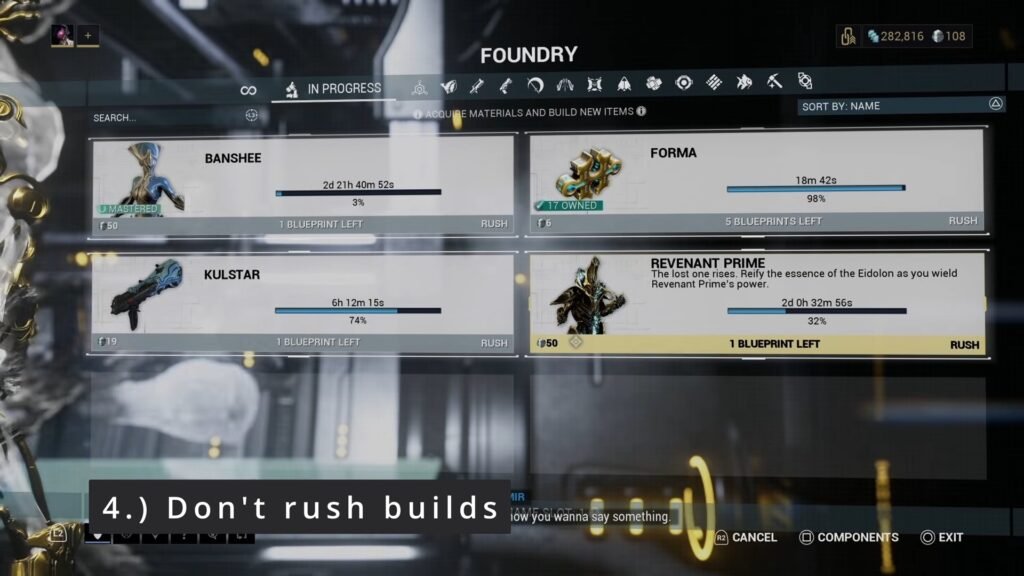
4.) Rushing builds with Platinum
Also, try to avoid the temptation of rushing builds to completion in the Foundry. This is a great way to waste Platinum.
One way that Warframe can be arguably kind of pay-to-win or exploitative is it does take a very long time to craft anything — usually between 12 hours and 3 days.
But still, just take a break from the game. Do something else. Wait for whatever you’re crafting to be crafted instead of wasting your Platinum on finishing the job.
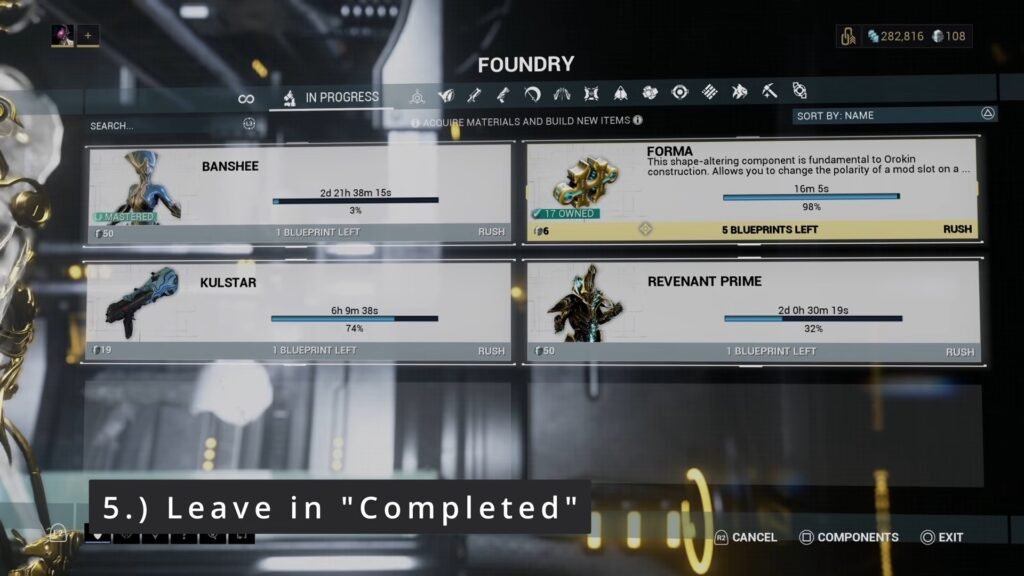
5.) Buying slots to collect completed builds
Also, keep in mind you don’t have to claim an item just because it’s finished building. Anything you’ve built in the Foundry will remain in the completed section until you want to claim it.
So, if you don’t have enough slots for something right now, don’t sweat it. Just leave it in the Foundry and claim it when you have the slots available.
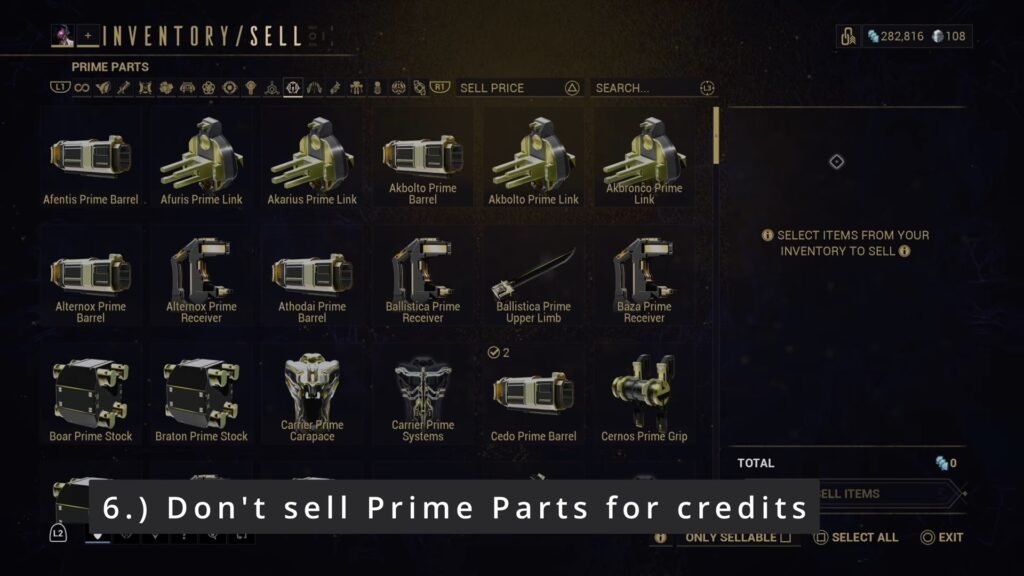
6. Selling Prime parts for Credits
We’re going to finish up here by recommending that you do not ever sell any Prime Parts for Credits. It’s much better to exchange these for Ducats, which you can then use to buy items from the periodic vendor Baro Ki’Teer.
I’ll have a whole guide on that eventually as well, but for now, just understand you should hoard Prime Parts — which you get from Void Fissure missions — and not sell them for Credits.
Conclusion
That’s going to do it. I really hope you found the guide to be useful.
Again, as a new Warframe player, the game can be overwhelming. I hope this guide helped you with not feeling overwhelmed in the game and set you up for success in Warframe.
In the comments, please let me know if there’s anything else you want to know about — any other guides you like me to make.
This guide was quite the labor of love. I appreciate all your support and for sticking with it until the end.


Leave a Reply